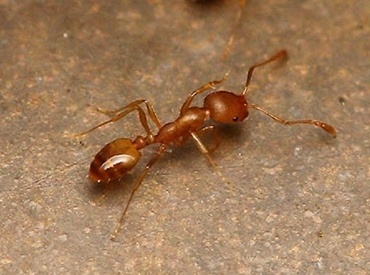
Pharaoh Ants are notorious indoor pests, often unnoticed due to their small size and colour.. They are commonly seen in hospitals, rest homes, apartment dwellings, hotels, grocery stores, food establishments, and other buildings. They feed on a wide variety of foods including jellies, honey, shortening, peanut butter, corn syrup, fruit juices, baked goods, soft drinks, greases, dead insects, and even shoe polish. These ants gnaw holes in silk, rayon, and rubber goods. An individual colony normally contains 1,000–2,500 workers, but often a high density of nests gives the impression of massive colonies.
| Common name | Pharaoh Ant |
|---|---|
| Scientific name | Monomorium Pharaonis |
| Size | Worker ants -2mm Sexually matured -4mm |
| Colour | Yellow to reddish brown |
| Shape | Segmented; oval |
| Habitat | Walls, cabinet voids, behind baseboards, refrigerator insulation, the hollows of curtain rods, the folds of clothes, sheets and paper and other undisturbed dark spaces. |
| Life span | Worker ants - 9 to 10 weeks Queen ant - 4 to 12 months |
LIFE CYCLE:Eggs: The pharaoh ant queen can lay hundreds of eggs in her lifetime. Most lay 10 to 12 eggs per batch in the early days of egg production. Eggs hatch in five to seven days. Monomorium pharaonis eggs hatch into larvae.
Larva:Larvae grow and develop over 22 to 24 days, passing through several instars “growth phases which end with molting. As the larvae grow, they must molt to a larger stage. Molting is regulated by the molting hormone, ecdysone. This hormone is released by a gland located in the thorax, which is stimulated by the "brain hormone" produced by neurosecretory cells.
Pupa:When the larvae are ready, they enter the pupal stage to undergo complete metamorphosis that is completed in 9 to 12 days later. The pupal stage is the most vulnerable to environment and predators. The pupae are relatively inactive, and do not eat.
Adults:Adult ants take a total of 38-45 days to fully mature, while another 4-5 days are required for them to reach sexual maturity. After a short while, the males die, and the queens lose their wings and find a new place to begin her colony. They are light yellow to reddish brown in color with a darker abdomen. Pharaoh ant workers have a non-functional stinger used for generating pheromones. The narrow waist between the thorax and abdomen has 2 nodes and the thorax has no spines. Pharaoh ant eyesight is poor and they possess on average 32 ommatidia. The antennal segments end in a distinct club with 3 progressively longer segments. Workers can grow from eggs to adults in as little as 38 days and may live for 9 to 10 weeks. Queen pharaoh ants can live for 4 to 12 months, but male pharaoh ants die within three to five weeks of mating.
DAMAGES:Pharaoh Ants nesting in our wooden structures can cause significant and costly damages. They can also cause damage to foam insulation. Pharaoh ants do not sting but they can bite. While Pharaoh ant bites are not poisonous, they can cause pain and transmit diseases and contaminate sterile materials, especially in healthcare environments. They can also contaminate sterile equipment and materials, food and even wounds in flesh.