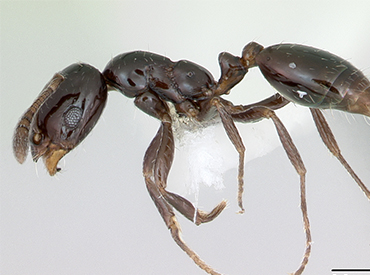
Little Black Ant can make their nests outdoors, in forests or right in your backyard, often under rocks and tree bark. These ants always feed on Sugary liquid called honeydew, made by small insects called Aphids and scales. Also, dead insects, spiders, and your trash. Colonies are moderately sized to large, containing up to 2,000 workers and many queens. Colonies consist almost exclusively of workers and brood (eggs, larvae, and pupae) during most of the year, but winged males and females are produced during the summer.
| Common name | Little Black Ant |
|---|---|
| Scientific name | Monomorium Minimum |
| Size | Worker ants -1.5mm Sexually matured 3 mm |
| Colour | Jet black |
| Shape | Segmented; oval |
| Habitat | Found in the soil in open areas of lawns or under objects such as stones, bricks, wood and logs. In buildings, they nest in woodwork, wall voids, masonry, and under carpets |
| Life span | Worker ants -4 months Queen ant - 12-15 months |
LIFE CYCLE:Eggs: 5 to 6 days after being laid, Monomorium pharaonis eggs hatch into larvae.
Larva:: Larvae grow and develop over 22 to 24 days, passing through several instars “growth phases which end with molting. When the larvae are ready, they enter the pupal stage.
Pupa:The pupa stage undergoes a complete metamorphosis 9 to 12 days later. The pupal stage is at its most vulnerable to environment and predators. The pupae are relatively inactive, and do not eat.
Adults:Adult ants take a total of 38-45 days to fully mature, while another 4-5 days are required for sexual forms to reach maturity. They are very tiny in size measuring1.5 to 3 mm with Jet black colour. It has two nodes on the petiole and Antennae have 12 segments with a 3 segment club The life span of worker ants is just 4 months whereas queens ants may live up to 12-15 months.