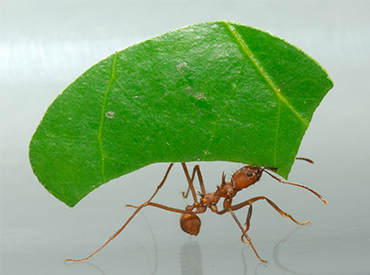
Leafcutter Ants are species of ants that are fungus farmers. They cultivate their own food, a type of fungus, in underground gardens. They are usually found in underground where they grow their own food. Leafcutter ants build huge nests up to 50 feet across and 16 feet deep.
| Common name | Leaf Cutter Ants |
|---|---|
| Scientific name | Atta Cephalotes |
| Size | Worker ants - 2 to 14 mm. Sexually matured - 18 to 22 mm. |
| Colour | Orange to brown to red to black |
| Shape | Segmented; oval |
| Habitat | Underground |
| Life span | Worker ants - 1 to 2 years Queen ant - 15 to 20 years |
LIFE CYCLE:Eggs: Ant eggs are oval shaped and tiny (they are on the order of 1 mm long, but the queen's egg is many times larger).
Larva: Newly hatched larvae are about 0.5 mm long, male larvae can grow to 2.5 mm long. Larvae are white and curved, straightening as they grow. They weigh 0.1 to 0.5 mg. Male and worker larvae are shiny and can be distinguished from the queen larvae.
Pupa:After reaching a certain size, the larva spins a silk like cocoon around itself (against a solid object, like the wall of the chamber) and pupates. During this time the body metamorphoses (changes) into its adult form.
Adults:The pupa emerges as an adult. The entire life cycle usually lasts from 6 to 10 weeks. The queens are the largest in the colony, while the males are bigger than the workers. The size of the queen is 22 mm, males are 18 mm and the workers are just 2-14 mm. Leafcutter Ants like all insects, have jointed legs, three body parts (the head, thorax and abdomen), a pair of antennae, and a hard exoskeleton. The exoskeleton is made up of a material that is very similar to our fingernails. Leaf cutters are large ants that have long legs. The worker leaf cutter ant ranges from about 2-14 mm long. The males are 18 mm long. The queen may be over 22 mm long. Leafcutter ants range in color from orange to brown to red to black. Life span of worker ants is 1 to 2 years and queens live up to 15 to 20 years.
DAMAGE Defoliation by leaf cutter ants can resemble damage produced by several other leaf chewing insects, particularly sawflies and leaf cutting bees. Trees defoliated by the leaf cutting ant usually are within sight of an ant nest and the ants themselves may be seen carrying leaves. Foraging trails will be littered with pieces of leaf tissue that can be traced to a feeder hole. Considerable damage to a plant can occur in a few hours. Small- to medium-sized trees can be stripped in one night.