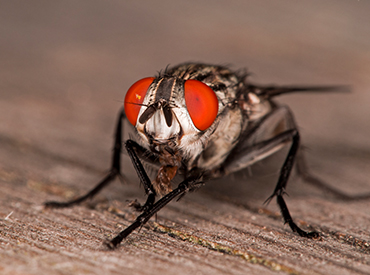
Flesh flies differ from other species of flies because instead of eggs they directly deposit larvae or maggots on the decaying flesh or wounds of mammals. Their breeding grounds are of places of excrement, decaying vegetation and animal carcasses. Flesh flies appear like horse fly but they are larger in size with varying light to dark gray in colour. They differ from most flies in that they are ovoviviparous, opportunistically depositing hatched or hatching maggots instead of eggs on carrion, dung, decaying material, or open wounds of mammals . Some flesh fly larvae are internal parasites of other insects such as Orthoptera, and some, in particular, the miltogramminae, are kleptoparasites of solitary Hymenoptera. Flesh flies are found in urban and rural communities but, fortunately, are relatively uncommon in houses or restaurants. They breed in excrement, decaying vegetable matter and animal flesh or meat.
| Common name | Flesh Fly |
|---|---|
| Scientific name | Sacrophagidae |
| Size | Medium to large |
| Colour | Light to dark gray |
| Habitat | Found in both rural and urban communities. Uncommon in houses and restaurants.. |
| Life span | About 30 days |
Larva:These near white to yellowish maggots have pointed heads. Depending on the species, they range from 10 to 22 mm in length when fully grown.
Adults:Flesh flies typically have gray bodies with three black stripes on the thorax. The abdomen has a light and dark gray checkerboard pattern and is often red at the tip. Though some species may be smaller than house flies, most flesh flies are about 10 to 13 mm long. Males are more hairy, with robust front legs that assist in their attempts to copulate..
They live on an average for about 30 days.