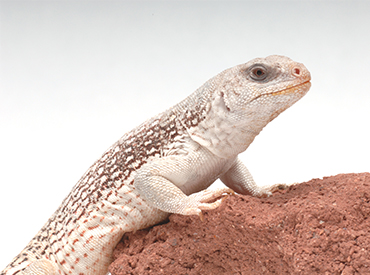
Desert Iguana is one of the most common lizards of the Sonotan and Mojave deserts. They live in loose sand and below scattered rocks. They live in subtropical scrub habitats with sparse vegetation and low bushes. Primarily herbivorous, they eat buds, fruits and leaves of many annual and perennial plants. They are especially attracted to the yellow flowers of the creosote bush.
| Common name | Desert Iguana |
|---|---|
| Scientific name | Dipsosaurus Dorsalis |
| colour | Pale gray-tan to cream |
| size | Approximate 18 inches |
| Habitat | Loose sand and scattered rocks |
| Life span | Approximate 14 years |
LIFE CYCLE:Generally, they breed once a year. Females lay 8 eggs per clutch. Hatching occurs after 60 days. Once the eggs hatch, there is no parental involvement. They reach sexual maturity around 31 to 33 months. Very little is known about the actual reproductive processes and gestation about this species. They are commonly pale grey-tan to cream in colour, with a light brown reticulated pattern on their backs and sides. During the breeding season, both males and females exhibit pinkish pigment on the sides of their ventral surfaces. Adults reach a maximum size of 18 inches. The average body mass of an adult is 90g. The lifespan of this species may exceed 14 years.