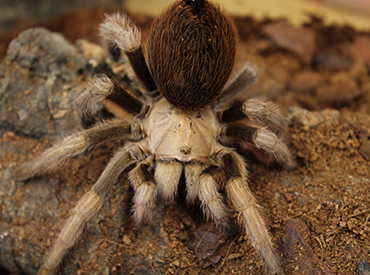
Desert Blonde Tarantula belongs to the spider family named Theraphosidae and as the name suggests, the Desert Blonde Tarantula Spiders live predominantly in deserts. They burrow in the sand and sometimes live there for a lifetime. But they could also migrate to burrows discarded by other spiders, rodents and reptiles. Desert Blonde Tarantula can live without water for a long time as they are used to living in the harsh, desert environment. As a result, they can survive extreme temperatures of heat and cold. Though they carry venom, it causes only a mild irritation like itching in humans.Sometimes, these spiders are kept as pets and those raised in captivity are less aggressive. However, when disturbed, they release urticating tiny, blond hairs which are as sharp as microscopic needles and can cause rashes.
| Common name | Desert Blonde Tarantula |
|---|---|
| Scientific name | Aphonopelma Chalcodes |
| Weight | Approximate 5 to 10 grms |
| Length | Approximate 49 to 68mm |
| Color | Gray to dark brown and black |
| Mating Season | Spring |
| Number of eggs | Approximate 700 to 1000 |
| Habitat | Desert Soil |
| Lifespan | 20 to 25years |
Egg:Average number of eggs laid by t these spiders are700-1000.
Spider Lings: Divided into two body segments: Cephalothorax and abdomen. The cephalothorax is grey to dark brown and the abdomen is dark brown to black. The body is covered entirely with hair that forms a pad below the tip of each of the 8 legs. This species eats crickets and other large insects. They may live for up to 20 years. In captivity, females have been known to live for 25 years. This is a long-lived but slow growing species.
Damage:Desert Blond Tarantulas do not have great negative impacts on humans. Although its bite is painful, it is not highly poisonous. The venom is similar to that of a mosquito or a bee sting.