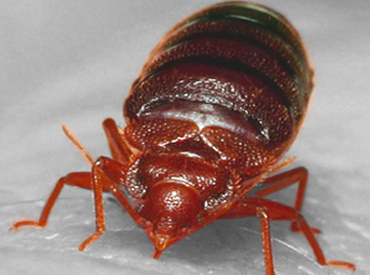
Cimex Lectularious is a common bed bug which people living in the Indian subcontinent need to worry about. These bed bugs suck blood from humans, especially at night. Due to their nocturnal nature, they cause discomfort during sleep. This insect adapts very well to temperate climatic conditions and almost always lives in a human environment.
| Common name | Cimex Lectularious Bed Bug |
|---|---|
| Scientific name | Cilmex Lectularius Linnaeus |
| Size | Approx 5-7 mm |
| Nymphs development time | Approx 1 to 1 .5 months |
| Habitat | Hiding mattresses, box springs, bed frames and headboards |
| Life span | Approx 10 months |
GIST OF LIFE CYCLE:Female bed bugs cement their small, oval eggs in batches of about THREE TO EIGHT eggs at a time and a total of 300 to 500 eggs by a single bug. It is tiny, the size of a pinhead, is approx 1 mm. pearl-white in colour and marked by an eye spot if more than five days old. Eggs hatch approx. 6 to 10 days.
Nymphs:During the lifetime of a bed bug we will see the following nymph stages:
Bed bugs can become full-grown in about one to one and half months. It requires a blood meal for it to moth to the next stage. In general, young bed bugs or nymphs are smaller, translucent or whitish-yellow in colour and if not recently fed, are nearly invisible to the naked eye because of their colouring and size.
Adults:Adult bed bugs a have long and brown, flat, oval-shaped body. If they feed on blood recently it becomes balloon-like, reddish-brown and more elongated. The overall life span of bed bug is nearly ten months.
Horse flies life span varies from 20 to 40 days.